Tools
Premiere Pro, Photoshop, Audition
Descriptors
Editing, Animating, Captioning, Audio Editing, User Research
Project Context
During Spring semester of my Sophomore year I took a client consulting class. This class spent the semester focusing on working with real clients and the process associated with it.
During the second half of the semester, I worked on a product delivery team of five students to create short videos for Livingston County Historical Society and Museum's salt mining exhibit. Our videos were focused on covering the different parts of the salt mining process and other interesting information about the salt mining company, American Rock Salt, that the museum was working in collaboration with.
During this project we also worked with the SCRUM methodology to consistently deliver content.
Final Deliverables
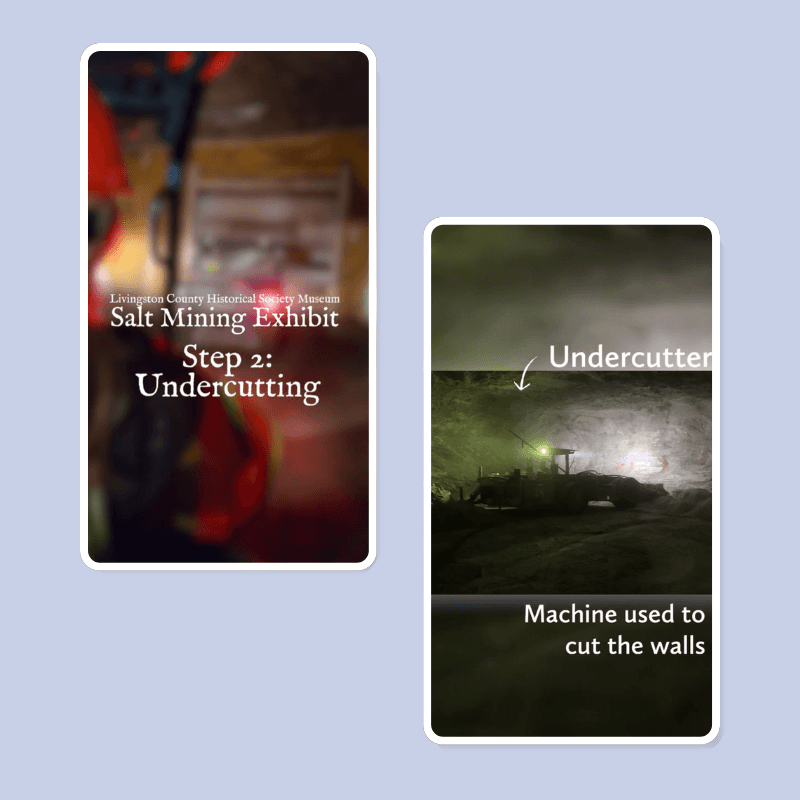
Our final deliverables were eight captioned videos covering information about American Rock Salt. Two of these videos are provided below.
Project Process
Problem
Livingston County Historical Society and Museum was setting up their rock salt mining exhibit, but didn't have any content that showed actual visuals from the mine in a way that was educational and entertaining.
Solution
Our team created eight videos focusing on different aspects of rock salt mining. We focused on ensuring they were educational, especially to K-12 students.
Pre-Production
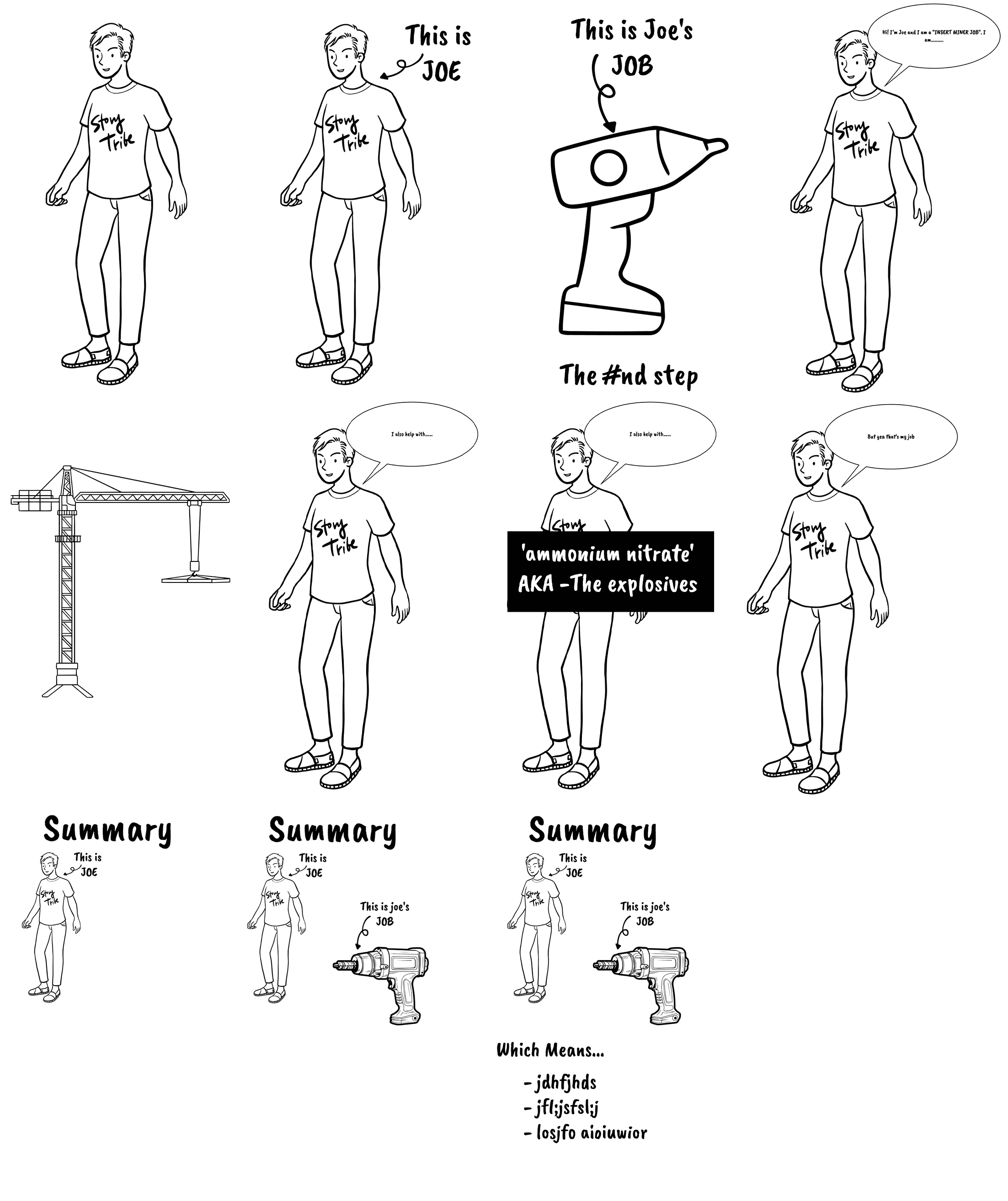
At the very beginning of the project, we created an outline script and storyboard to reference as we created our videos. My teammate Megan created the outline script and was an integral part of stakeholder communication.
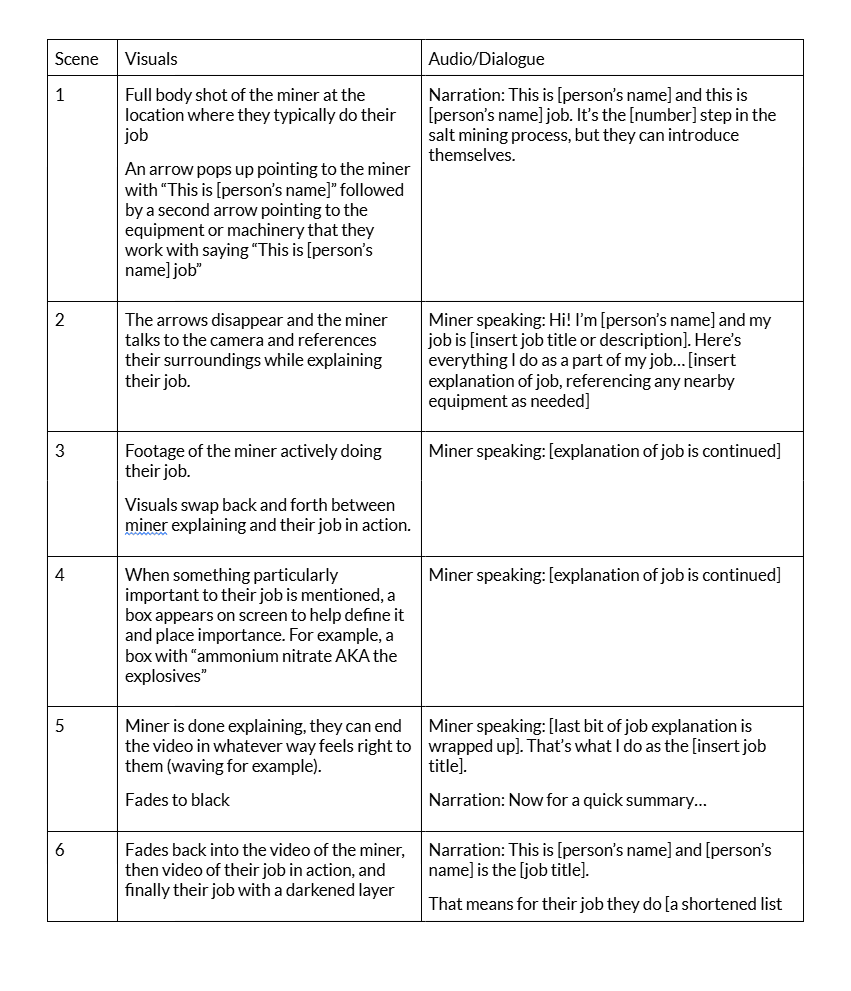
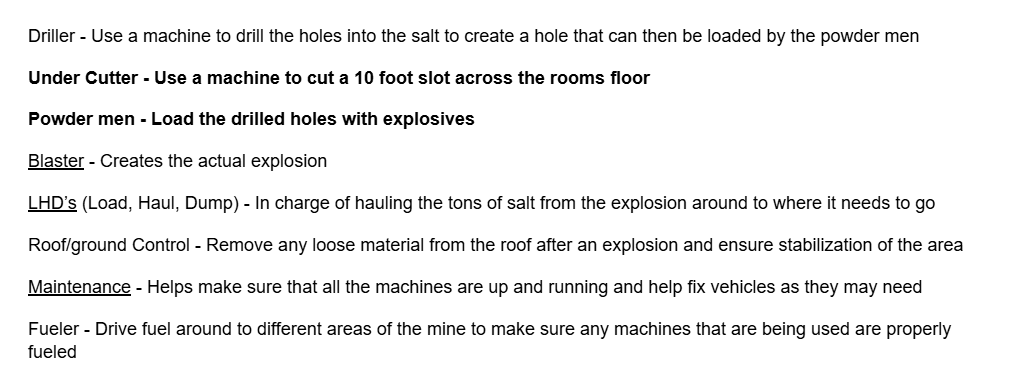
Additionally, our team worked together to research American Rock Salt to better understand all of the jobs within the salt mining process. We created a list of the eight main jobs we saw with brief descriptions of what they did as a reference.
Despite our focus on preparing materials and planning in advance before we started making specific videos, we eventually ran into a problem. The footage we were provided didn't follow the scripts we had created and the museum had informed us getting new footage wouldn't be possible, meaning we had to pivot and base our storyboards and scripts on the footage available to us.
Editing, Graphics, Captions, & More
Different people on our team cut videos to be less than a minute. Megan was then given edited videos to add graphics.
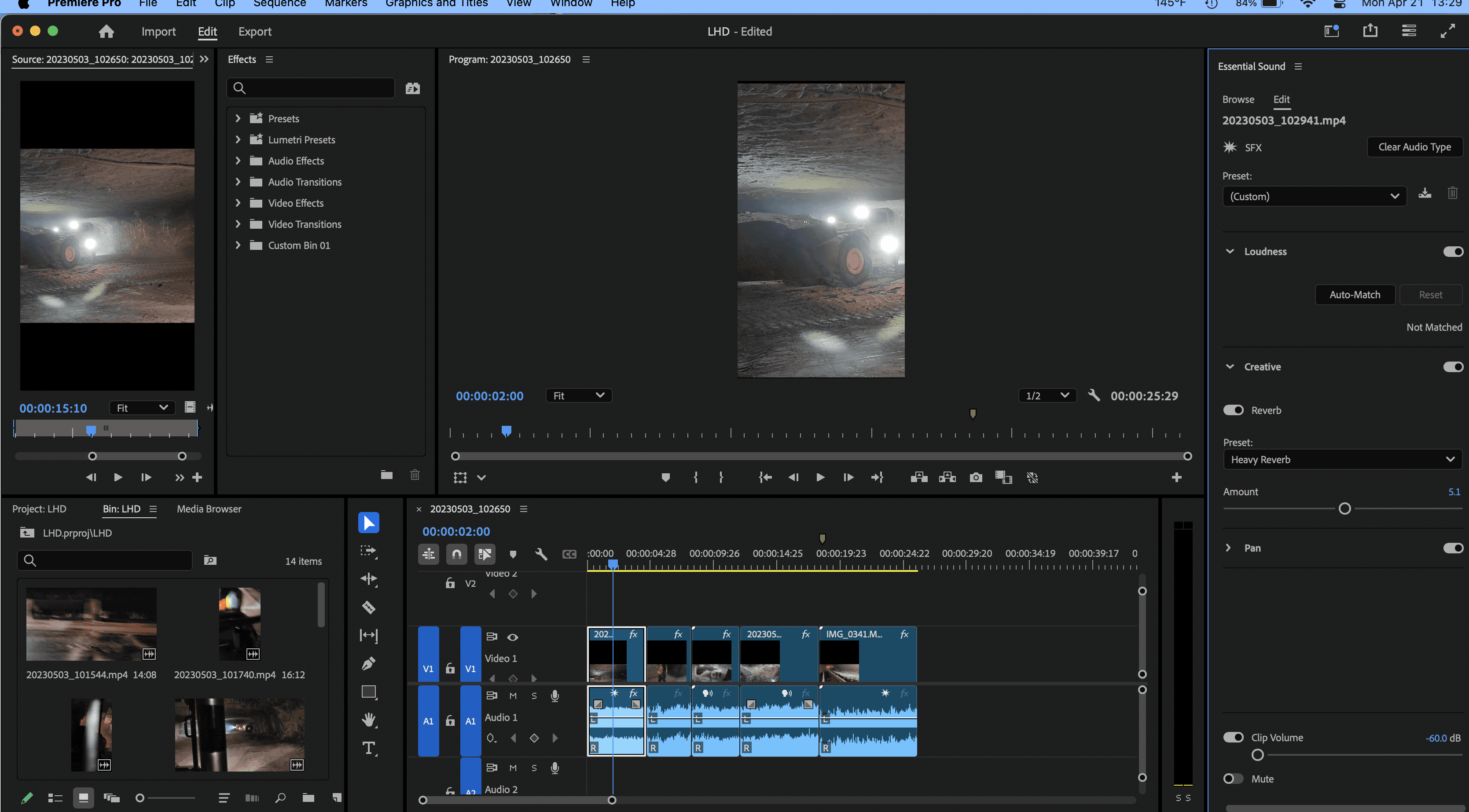
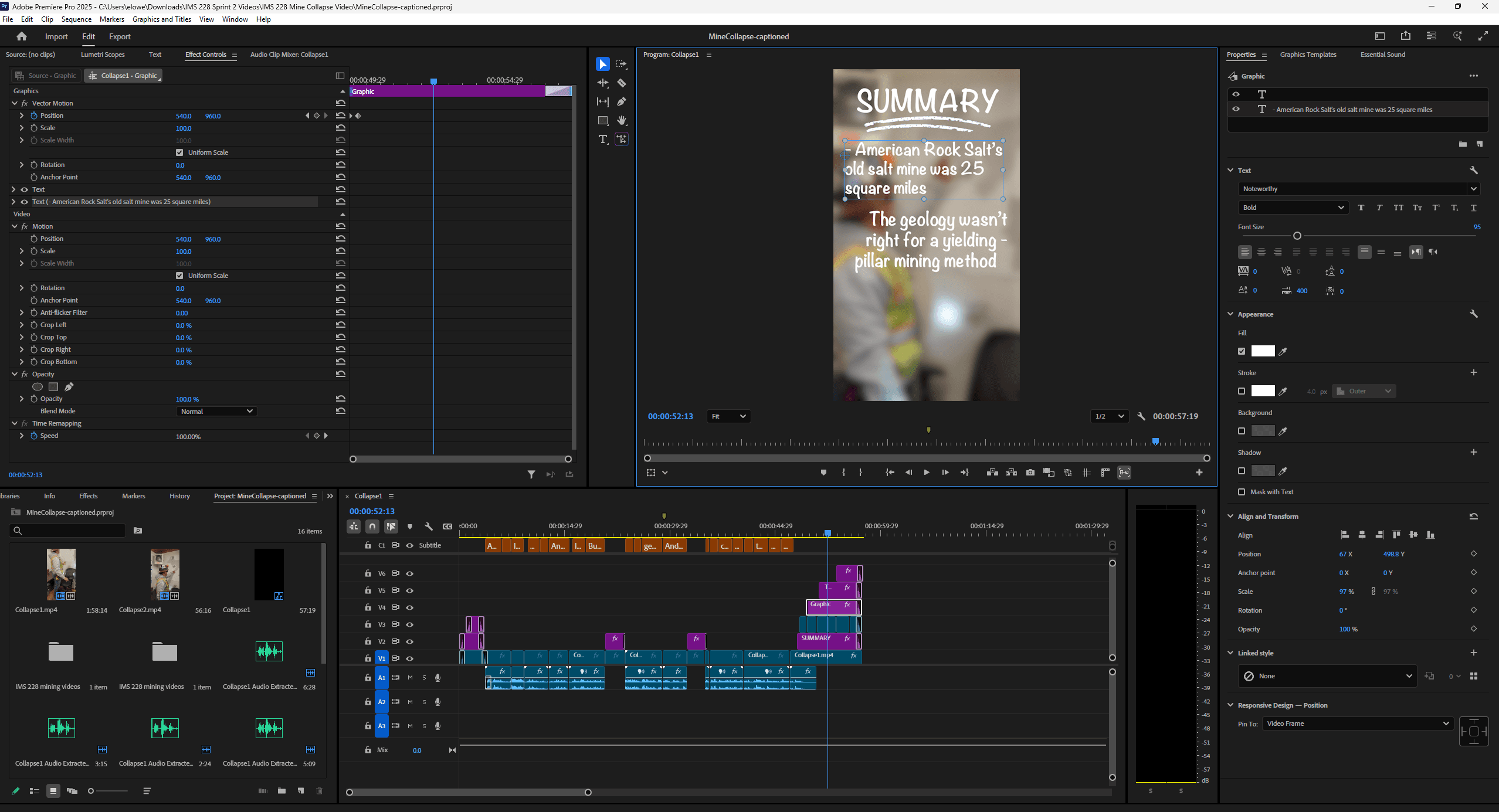
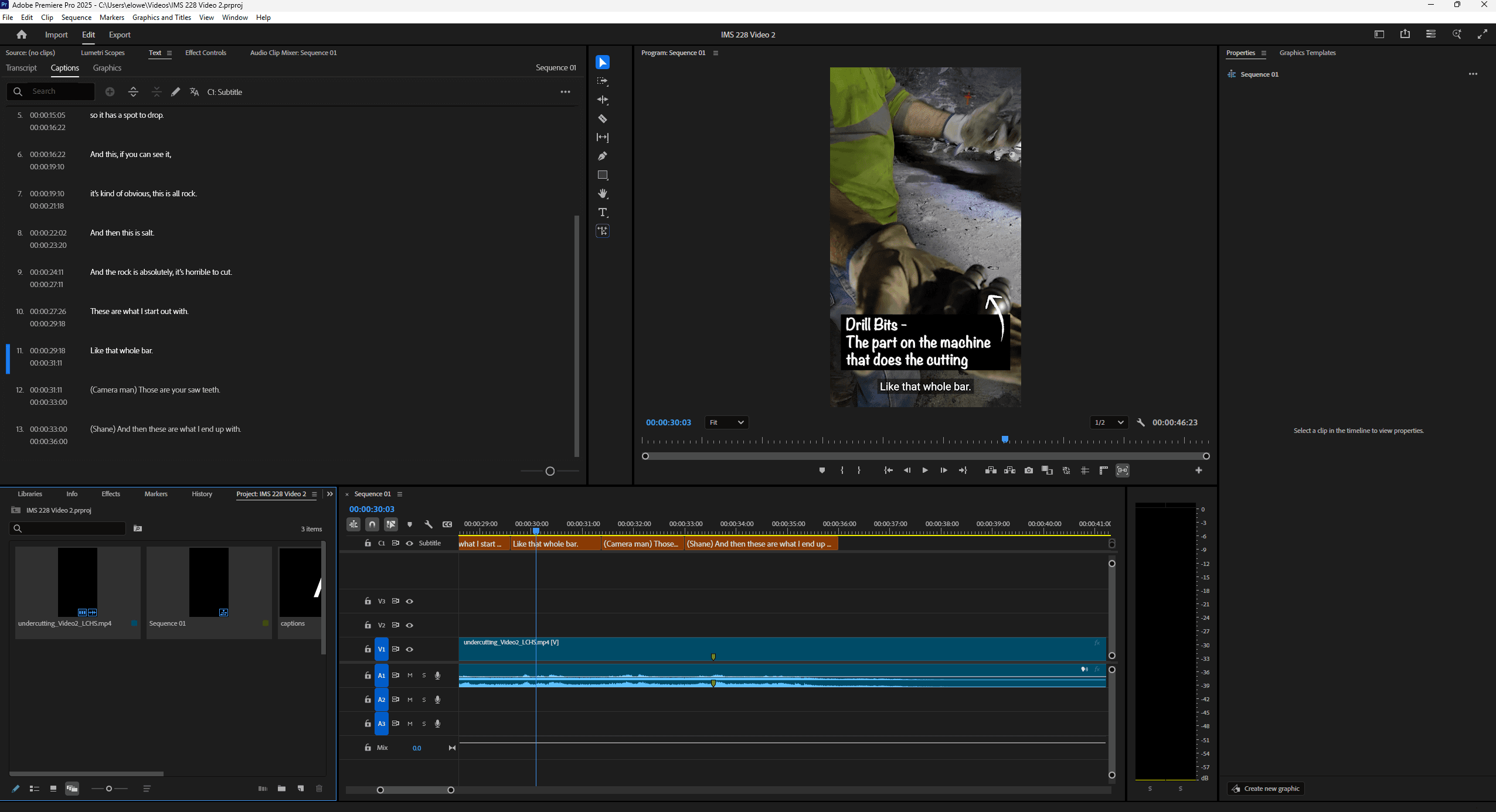
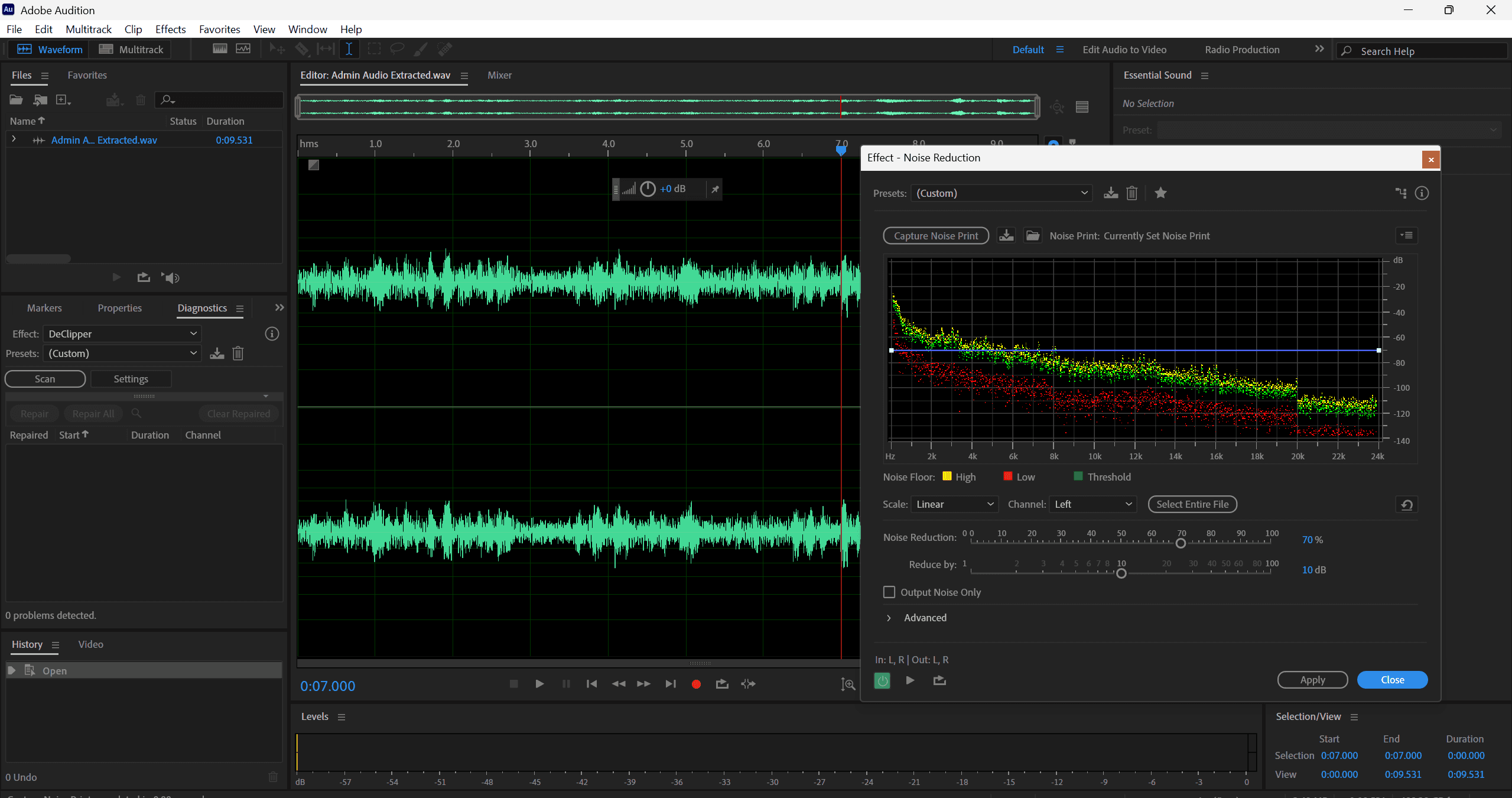
After graphics, Megan then gave me videos to add captions to. In addition to ensuring graphics and captions lined up, I also used Adobe Audition to reduce background noise and amplify the speaker's volume.
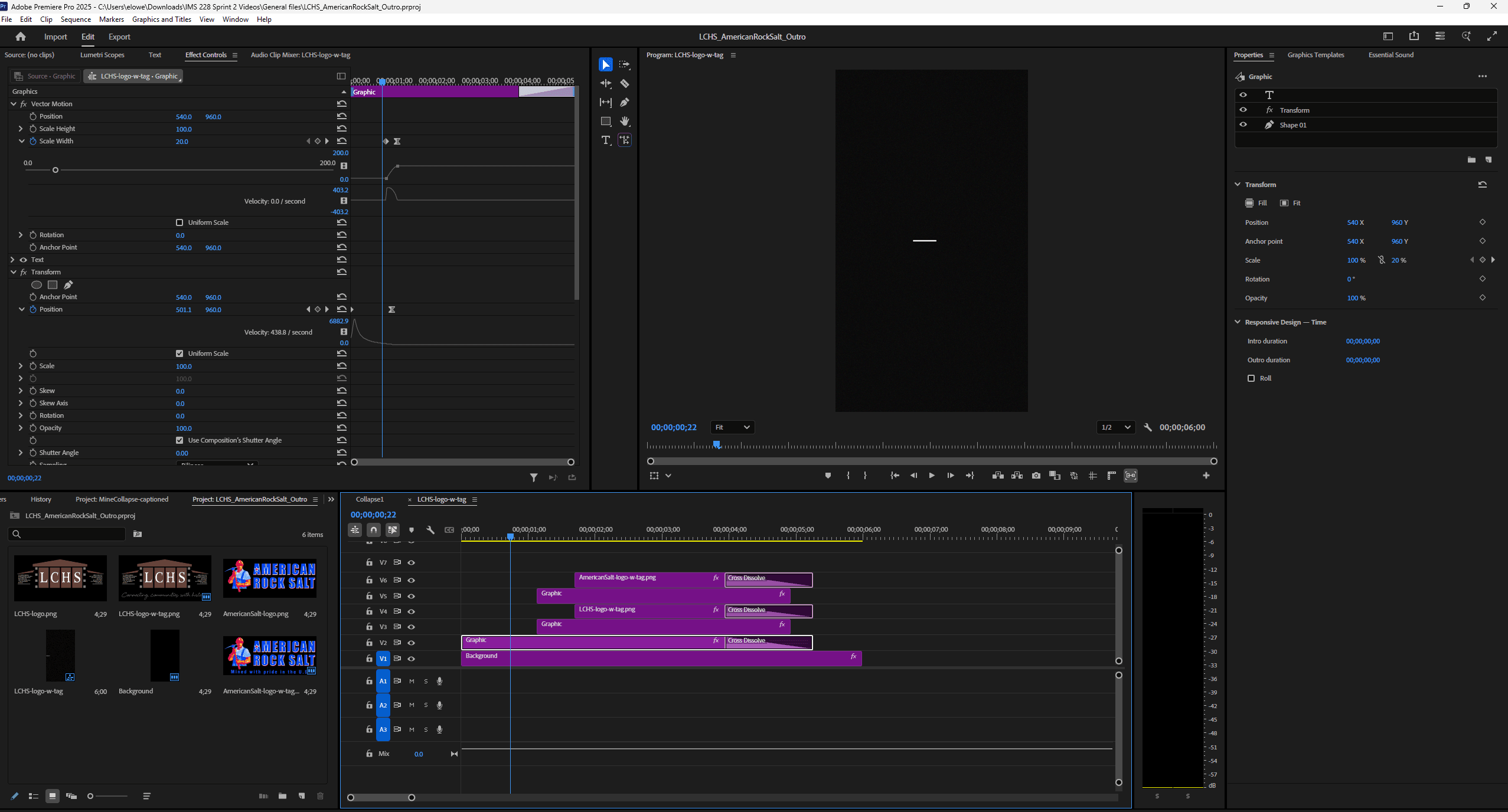
A final addition we had was an outro animation to show the collaboration between Livingston County Historical Society and Museum and American Rock Salt. We kept the animation simple and provided all videos both with and without.
User Testing
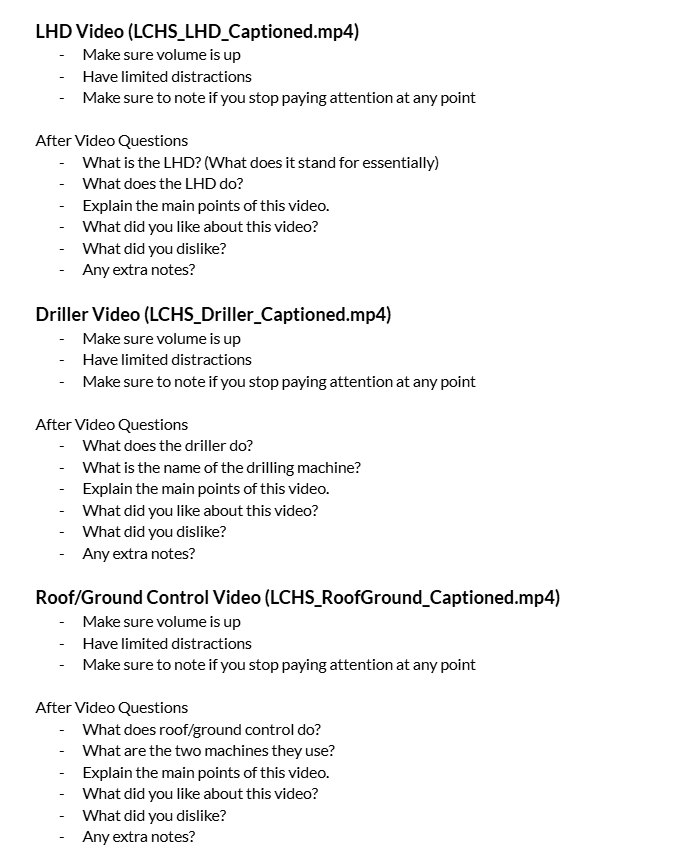
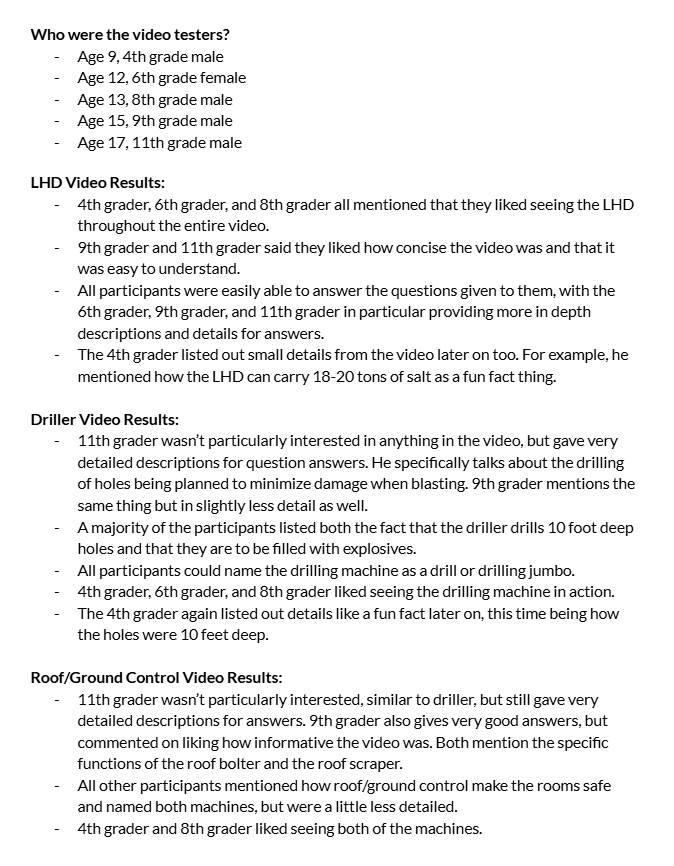
Over this process, we conducted two different user testing sessions. Each video was provided to school age kids and notes were taken about what they didn't like or did like for each video.
Sprint One Deliverables
Throughout the project we had three rounds of deliverables. Sprint one's deliverables were two videos for the Powdermen and the Undercutter.
Sprint Two Deliverables
Sprint two consisted of eight videos, six new ones and fixed versions of the previous two videos. Our six new videos were: the LHD, Roof/Ground Control, Driller, Admin, Fire Safety, and the Mine Collapse.
Conclusion
There is a fair amount that I learned from this project, whether it be in relation to video editing or to working with clients.
For the video editing aspects, I have a much better understanding of how Premiere Pro works now, from cutting videos down, to adding graphics and text, to captioning. I also specifically challenged myself when it came to the animation aspect, and while it may have taken me a while to create it, I learned a lot from the experience and I have a much better grasp of how animation works in Premiere Pro now.
When it comes to clients, I've realized that you always need to have backups planned in case something can not be done on their end like you hoped, and that there are differing specific things that clients will focus on. For the situation with getting new footage, we ended up only being able to deliver two videos that sprint because we were so focused on getting the footage, but when we instead so quickly pivoted during the second sprint, we not only had the six videos planned but an extra animation for wow factor. That experience in particular has really shown me how important it is to be flexible and prepared to adjust plans whenever needed. For things clients focus on, in this case, there was a lot of emphasis on visual unity and proof reading for professionalism, which is why the final videos we provided had those font changes and I watched through them a couple of times in the hopes to catch any spelling or grammar errors.
Credits
All footage used was from American Rock Salt, their team, and Livingston County Historical Society and Museum and their team.
Thank you to the Livingston County Historical Society and Museum for this opportunity.